

Career Back 2 Women - Cyber Security

THREE CERTIFICATIONS IN ONE

The first ever flagship course that provides hands-on training experience to help individuals become cyber security experts to protect enterprises in this digital era.

FISST Academy Excellence

Learn from the Best

Hands-on Learning

Career Assistance

Course Objectives

The CB2W program empowers women professionals to restart their IT careers after a break. Designed by FISST and IITM Pravartak, this comprehensive initiative offers three specialized certification tracks in ONE

The Career Back 2 Women (CB2W) Program is a specialized initiative designed to empower women re-entering the workforce, particularly in the field of cybersecurity.

This comprehensive program offers three certifications in one, equipping participants with essential skills to thrive in the digital security landscape designed.

This program aims to empower and reintegrate women professionals who have taken a career break, particularly in the IT sector

For Course Info

    Certified Professional Back To Technical Track (BTCUBE)

    This foundational module provides women professionals with essential updates on the IT industry's latest technologies and trends, preparing them for a smooth reentry into the workforce.

    Certified Professional in Basics of Cyber Security

    This track equips participants with fundamental cybersecurity skills, covering techniques to prevent attacks and monitor threats, ensuring readiness for today's cybersecurity challenges.

    Certified Professional in Advanced Cyber Security and Digital Forensics

    Building on foundational skills, this advanced certification delves deeper into cybersecurity, focusing on incident response, digital forensics, and hands-on practices with current tools and technologies in the field.

    Eligibility

    Pre Requisites

    1. Live lectures will be the primary mode of instruction, delivered online to participant desktops, laptops, or classrooms.
    2. Sessions led by distinguished academicians and industry experts.
    3. The program includes lectures, discussions, exercises, and labs.
    4. Students gain access to FISST Academy’s Learning Portal for resources and assessments.
    5. Real-time interaction with professors is available during classes and via the portal for questions.
    1. The program includes periodic evaluation components such as quizzes, assignments, and other objective or subjective assessments as applicable.
    2. A minimum of 80 percent attendance in live lectures is mandatory.
    3. Participation in the two-day on-campus boot camp is a prerequisite for successful program completion.
    4. Participants who meet the attendance criteria and successfully complete the evaluations will receive a certificate of completion.

    SATURDAY & SUNDAY
    CLASS TIMINGS : 10.00 AM – 12.00 PM

    Topics Of CB2W

    Certified Professional Back To Technical Track (BTCUBE)

    1. Introduction to IoT and how devices communicate.
    2. Smart home technologies like smart lights and voice assistants.
    3. How smart cities manage traffic and waste.
    4. Basics of 5G and why faster networks matter.
    1. What is AI? Examples in Everyday Life
    2. Basics of Machine Learning
    3. Image Recognition and Voice Assistants
    1. Password management
    2. Recognizing phishing emails and other threats
    3. Safe browsing habits and using privacy settings
    4. Public Wi-Fi
    5. Protecting personal data on social media and devices
    1. What is cloud computing
    2. Introduction to blockchain
    3. How cryptocurrencies work (simple explanation)
    4. What quantum computing
    1. Software development
    2. AI in software engineering

    15 Hours
    Assessments & Quizzes

    Certified Professional in Basics of Cyber Security

    1. Information Security
      – Concepts of Confidentiality, Integrity, and Availability (CIA)
      – Threats and Vulnerabilities in Information Security
      – Data Protection and Encryption Basics
      – Risk Management and Compliance (GDPR, ISO 27001, etc.)
      – Security Policies and Best Practices
    2. Application Security
      – Secure Software Development Life Cycle (SDLC)
      – Web Application Security (OWASP Top 10)
      – Mobile Application Security
      – Secure Coding Practices
      – API Security
    3. Network Security
      – Network Protocols and Security Layers
      – Firewalls, IDS/IPS, and Network Monitoring
      – Wireless Network Security
      – VPNs and Zero Trust Architecture
      – Network Threats and Mitigation Strategies
    1. Introduction to Physical Security Principles
    2. Security of Critical Infrastructure (Energy, Transportation, Finance,
      etc.)
    3. Access Control and Surveillance Systems
    4. Insider Threats and Social Engineering
    5. Disaster Recovery and Incident Response

    25 Hours
    Assessments, Quizzes & 10 Hours Hands-on Practicals

    Certified Professional in Advanced Cyber Security and Digital Forensics

    1. Introduction to Networks, Internet Services, and Digital Communication
      – Internet Services and How They Enable Connectivity
      – Web and Web Services
      – Email Analysis
      – Web Server Analysis: Logs and Threat Detection
      – Web Browser Analysis: Tracking Activity and Digital Footprints
      – Social Media: Data Collection and Techniques
      – Dark Web: Tools
      – Chat Services: Encryption and Communication
      – File Sharing & Peer-to-Peer Networks: Risks and Analysis
    2. Mobile Device Forensics and Data Extraction
      – Legislation and Procedures
      – Evidence Seizure and Preservation from Devices
      – SIM Cards: Theory and Analysis
      – Mobile Technologies and Artefacts
      – iOS and Android Forensics
      – ‘Dumb’ Phones
      – Call Data Records and Cell Site Analysis
      – Backups and Cloud-Based Evidence Retrieval
      – Advanced Extraction Techniques
      – Emerging Mobile Device Trends
    3. Investigation and Evidence Collection
      – Role of the Indian Police Force in Criminal Investigations
      – Scene Approach: Planning and Initial Assessment
      – Managing Volume and Major Crime Scenes
      – Recording the Scene: Notes, Sketches, and Documentation
      – Crime Scene Photography: Techniques and Importance
      – Searching for and Locating Physical Evidence
      – Evidence Recovery Techniques and Best Practices
      – Ensuring Evidence Integrity and Preventing Contamination
      – Evaluating Evidence for Investigative and Legal Use
      – Proper Exhibiting and Packaging of Evidence
      – Compliance with ISO 17020 Standards
    4. Forensic Examination
      -Identifying Evidence of Application Execution
      – Proving Existence of Files and Recovering Deleted Artifacts
      – Cloud Storage Artifact Analysis
      – Profiling System Configurations
      – Investigating Network Activity and Tracking Physical Device Locations
      – Analyzing File and Folder Interactions for Evidence Trails
      – Investigating Browser Activity and Internet Usage Patterns
      – Profiling Account Usage and User Access History
      – Examining External Device and USB Activity for Data Transfers
    1. Foundational Knowledge
      Network Fundamentals:
      – TCP/IP Model: Layers, protocols, and their functions
      – OSI Model: Layers and their functions
      – Network Addressing: IP addressing, subnetting, and routing
      – Network Devices: Routers, switches, firewalls, and their roles
      Security Fundamentals
      – Security Principles: Confidentiality, Integrity, Availability (CIA)
      – Security Threats and Vulnerabilities
      – Cryptography: Symmetric and Asymmetric Encryption
      -Network Security Policies and Procedures
    2. Network Security Technologies
      Firewalls
      – Types of firewalls: Packet filtering, stateful inspection, and proxy firewalls
      – Firewall Configuration and Management
      – Intrusion Detection/Prevention Systems (IDS/IPS):
      – IDS/IPS Technologies: Signature-based, anomaly-based and behavioral-based
      – IDS/IPS Configuration and Deployment
      Virtual Private Networks (VPNs)
      – VPN Technologies: Tunneling protocols (IPSec, SSL/TLS)
      – VPN Configuration and Security
      Network Security Protocols
      – Secure Shell (SSH), Secure Sockets Layer/Transport Layer
      – Security (SSL/TLS), and other relevant protocols
      Network Security Appliances
      – Firewall, IDS/IPS, VPN, and other network security devices protocols
    3. Network Detection and Packet Analysis
      Packet Analysis Tools
      – Wireshark, tcpdump, tshark, and other packet analyzers
      – Capturing and Analyzing Network Traffic
      – Interpreting Packet Headers and Data
      Network Detection and Response (NDR)
      – Network Traffic Analysis: Identifying malicious activity
      – Intrusion Detection and Prevention: Implementing and configuring IDS/IPS
      – Incident Response: Handling security incidents
      Ethical Hacking
      – Reconnaissance: Gathering information about a target network
      – Vulnerability Scanning: Identifying vulnerabilities in a network
      – Exploitation: Understanding how attackers exploit vulnerabilities
      Network Security Auditing
      – Security Audits: Assessing network security posture
      – Security Assessments: Identifying weaknesses and vulnerabilities
    4. Practical Exercises and Labs
      Hands-on Labs
      – Setting up and configuring network security devices
      – Analyzing network traffic with packet analyzers
      – Simulating and detecting network attacks
      – Developing and implementing security policies
    1. Malware Analysis
      Introduction To Malware
      -History of malware and its evolution
      -Types of malware (viruses, worms, Trojans, rootkits, ransomware, etc.).
      -Malware propagation and infection vectors.
      Operating System Fundamentals
      -Operating system architecture (user mode, kernel mode).
      -Process management, memory management, and file systems.
      -Networking concepts and protocols.
      Reverse Engineering Basics
      -Assembly language fundamentals (x86/x64).
      -Disassembly and debugging techniques.
      -Introduction to reverse engineering tools (IDA Pro, Ghidra, etc.).
    2. Static Analysis
      File Format Analysis
      -Portable Executable (PE) format (Windows).
      -ELF format (Linux).
      -Analyzing file headers, sections, and resources.
      String Analysis
      -Identifying strings, URLs, and IP addresses.
      -Analyzing command-line arguments and API calls.
      Malware Signature Analysis
      -Identifying malware signatures and patterns.
      -Using tools like YARA for signature detection.
      Malware Fingerprinting
      -Calculating file hashes (MD5, SHA1, SHA256).
      -Using online scanners and analysis platforms.
    3. Dynamic Analysis
      Setting up a Malware Analysis Lab
      -Virtualization and sandboxing techniques.
      -Network monitoring and packet capture.
      -Endpoint detection and response (EDR) tools.
      Malware Execution and Behavior Analysis
      -Observing malware behavior in a controlled environment.
      -Analyzing network traffic and file system changes.
      -Identifying persistence mechanisms and command-and-control
      (C2) channels.
      Debugging and Disassembly
      -Using debuggers to step through malware code.
      -Analyzing API calls and memory access.
      Malware Unpacking
      -Understanding common packing techniques (e.g., UPX,
      PECompact).
      -Unpacking malware using tools and techniques.
    4. Advanced Topics
      Setting up a Malware Analysis Lab:
      -Virtualization and sandboxing techniques.
      -Network monitoring and packet capture.
      Code Injection and Hooking
      -Understanding code injection techniques (e.g., DLL injection, Mprocess injection).
      -Analyzing hooking techniques (e.g., API hooking)..
      Malware Obfuscation and Anti-Analysis Techniques
      -Identifying and defeating obfuscation techniques.
      -Analyzing anti-analysis techniques (e.g., anti-debugging, antidisassembly).
      Malware Forensics
      -Analyzing malware samples in the context of forensic investigations.
      -Collecting and analyzing evidence.
      Machine Learning for Malware Detection
      -Introduction to machine learning algorithms for malware detection.
      -Building and training malware detection models.

    30 Hours
    Assessments, Quizzes & 20 Hours Hands-on Practicals

    Meet Our Mentors

    Lead Academic Faculty Members

    Prof. Mohan Ram C

    Adjunct Faculty, IIIT - Bangalore

    Mr. Rahul Mishra

    Director - Cialfor

    DR. Noor Mohammad S.K

    IIIT D&M - Kanchipuram
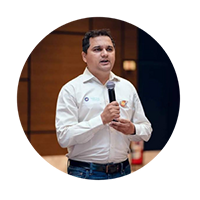
    Mr. Aniket Amdekar

    General Manager - Cyber Defence Education

    Ms. Sruthakeerthi M

    Executive Director - FISST

    Key Takeaways

    Admission Process

    1.
    Counselling

    Speak to your Admission counsellor to know if this program is the best fit for you and understand the learning benefits. If you think it is suitable and you decide to apply, your program advisor will share further details.

    2.
    Registration

    Interested applicants should register through the link shared by your admission counsellor and submit their academic credentials. Applications will be reviewed, and shortlisted candidates will be contacted by program advisors for further steps.

    3.
    Interview

    Shortlisted candidates will undergo an online interview to evaluate their academic background, professional experience, and program suitability. Final selections will depend on overall performance and at the discretion of FISST Academy.

    4.
    Final Notification

    Applicants who successfully clear the interview will be formally notified of their selection by the admission counsellor. Selected candidates must complete the fee payment within five days to secure their enrollment.

    Course Timeline

    Certified Professional Back To Technical Track (BTCUBE)

    Certified Professional in Basics of Cyber Security

    Certified Professional in Advanced Cyber Security and Digital Forensics

    Bootcamp at IIT Madras

    Rounds Application Deadline Provisional Selection Announcement Personal Interview * (Dates May Vary) Final Selection Announcement Fees Deadline Batch Commencement Status
    1
    10th April 2025
    3 Days from the Date of Application
    4 Days from the Date of Provisional Selection
    2 Days from the Date of Personal Interview
    5 Days from the Date of Personal Interview
    Aug-2025
    2
    15th May 2025
    3 Days from the Date of Application
    4 Days from the Date of Provisional Selection
    2 Days from the Date of Personal Interview
    5 Days from the Date of Personal Interview
    Aug-2025
    Yet To Open
    3
    25th June 2025
    3 Days from the Date of Application
    4 Days from the Date of Provisional Selection
    2 Days from the Date of Personal Interview
    5 Days from the Date of Personal Interview
    Aug-2025
    Yet To Open

    Interested in This Program?
    Secure your spot now.

    Average Salary Increase of 45%
    Highest Salary of 17 LPA
    Over 1000 Career Transitions
    50+ Hiring Partners

    Programme Fee

    Total Programme Fee

    Rs. 1,00,000/- + GST


    Payment Options

    Internet Banking

    Credit/Debit Card

    EMI Options Available

    What Our Students Say

    Student feedback is vital in helping us to get it right.

    I am Shruti Das I left my job 3 years back due to some personal commitment. I was planning to restart my career by joining a course that can help me to land in a good job after an extensive search I enrolled to Career Back 2 Women program. The highlight of this program is the classes are contacted by renowned teachers which is a real pro. I really feel privileged to be part of this program and would like to tank IIT Madras Digital Skills Academy for providing such a great opportunity to help women professionals like me. I strongly recommend this program to all women who wish to return as working professionals.
    Shruti Das
    My name is Gowri Mani Kumar. I am 52 years old. And I was last working about 6 years back and had to take a break and now when I wanted to know the restart my career I was very apprehensive as to how to go about it and thats when I came across this course certified by IIT Madras. I felt that it was especially made for professionals like me to restart their career. I found it very simple to follow. The faculty were excellent and they really took great efforts to make us feel comfortable inspite of not having any software background. I feel like this is the best thing that can happen to women like me who want to come back after taking a break. I strongly recommend women to take this opportunity
    Gowri Mani Kumar
    I am currently in the first batch of career back to women program that is being offered by IIT Madras moved out of my job about 6 years ago and now looking to re join the industry. In a way this program is very timely for me. I am thankful for providing us this platform and encouraging women professionals such as me. The experience has been enriching. Out teachers are knowledgeable and encouraging. They are industry experts eager to help. It constantly boosts one's morale. I strongly recommend women to use this opportunity to get certified.

    Roopashree
    I had to leave my job due to family reason. Lately I will struggling to find a suitable position in the industry. That's when I came across this wonderful initiative by Digital Skills Academy the Career Back 2 Women program. This program is aimed at equipping women with the latest trends and technologies in the industry. I am very proud to be a part of this program. It is very simple and efficient put together by eminent scholars who have ample knowledge and experience in their respective fields. I highly recommend this to all women who wish to restart their career with a bang!

    Malini

    Empower Your Cybersecurity Journey

    Dive into a Personalized Risk Assessment Challenge!

    Our Trusted Clients Of Repute

    Amazing clients and brands